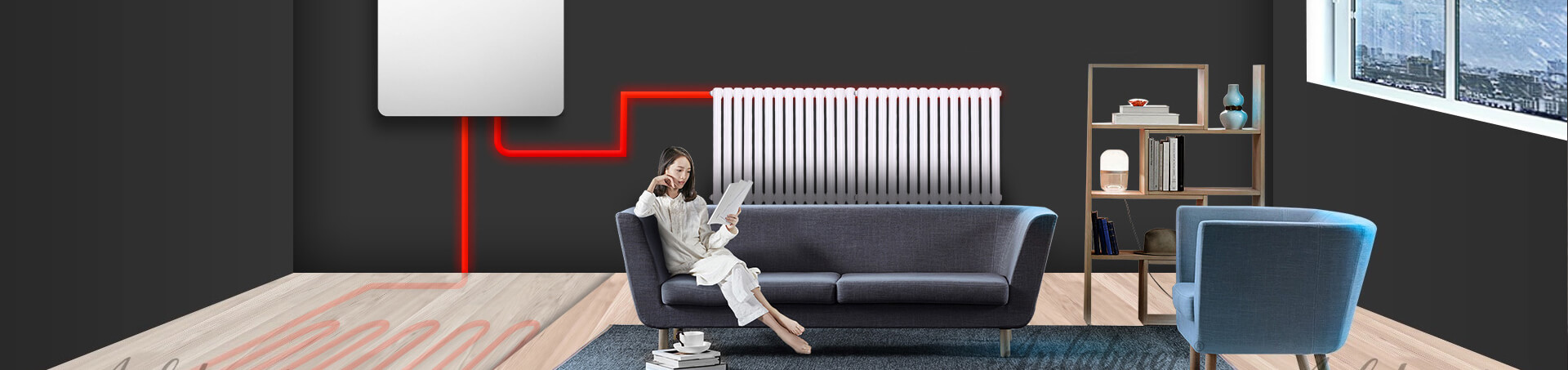
Your tankless water heater is not weaker in winter — your incoming water is colder. Your tankless water heater in winter is the same machine you installed in spring. What changed is the water arriving at its inlet, and that one difference explains most cold-weather complaints: a shower that felt hot in August now feels lukewarm at the same setting.
Almost every winter problem can be traced, tested, and usually solved without replacing anything. Here are the five checks worth doing before the cold settles in.
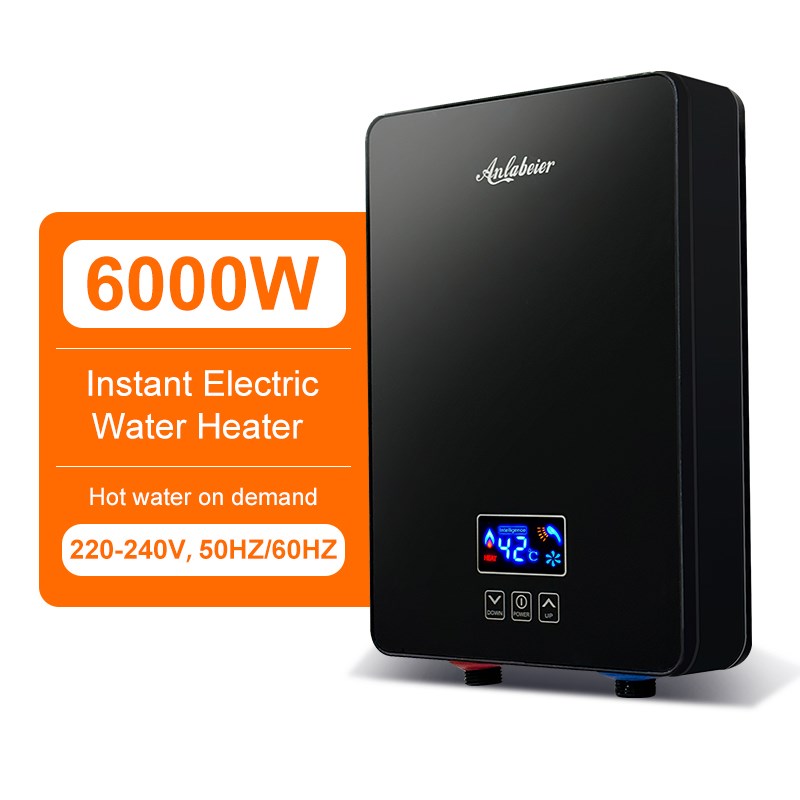
An instant electric water heater does not store hot water. It heats water as it passes the element, so its output depends on one thing above all: the gap between the temperature of the incoming water and the temperature you set.
Recommendation: check the rated temperature rise and the flow on your unit's nameplate, then compare it with your coldest inlet water — not with your average.
If you are unsure how to judge it, the sizing walkthrough in Apartment, Villa, or Rental? How to Pick the Right Tankless Water Heater for Your Home covers how to match capacity to a home.
Most sizing mistakes happen because people measure in warm weather.
Recommendation: if winter is the only season your installed unit disappoints, fix the flow before replacing it. A lower-flow showerhead and a longer gap between showers often solve what looks like a capacity problem.
Cold water and hard water are a rough combination: scale settles on the hottest surface in the system — your heating element.
Recommendation: put descaling on the calendar once a season in hard-water areas. Hard Water and Your Tankless Water Heater: A Descaling Guide walks through it step by step.
An instant electric heater has no tank to freeze, but that does not make it freeze-proof.
Recommendation: treat pipe insulation as part of the installation, not an optional extra. It costs little, and it protects both the pipes and the comfort you paid for.
Winter adds load to a home's electrical system — and to your patience if the heater shares a circuit.
Recommendation: test the safety device before winter, not after the first cold shower.
You do not have to change your system to get a better winter shower.
| What you notice | Likely cause | What to check |
|---|---|---|
| Water is warm, never hot | Colder inlet water, or scale on the element | Rating against inlet temperature; inlet filter and descaling |
| Flow drops in winter | Unit holding temperature by reducing flow | Flow rate, showerhead, simultaneous outlets |
| Unit cuts out mid-shower | Overheat protection, or a strained circuit | Clearance around the unit, element condition, breaker and wiring |
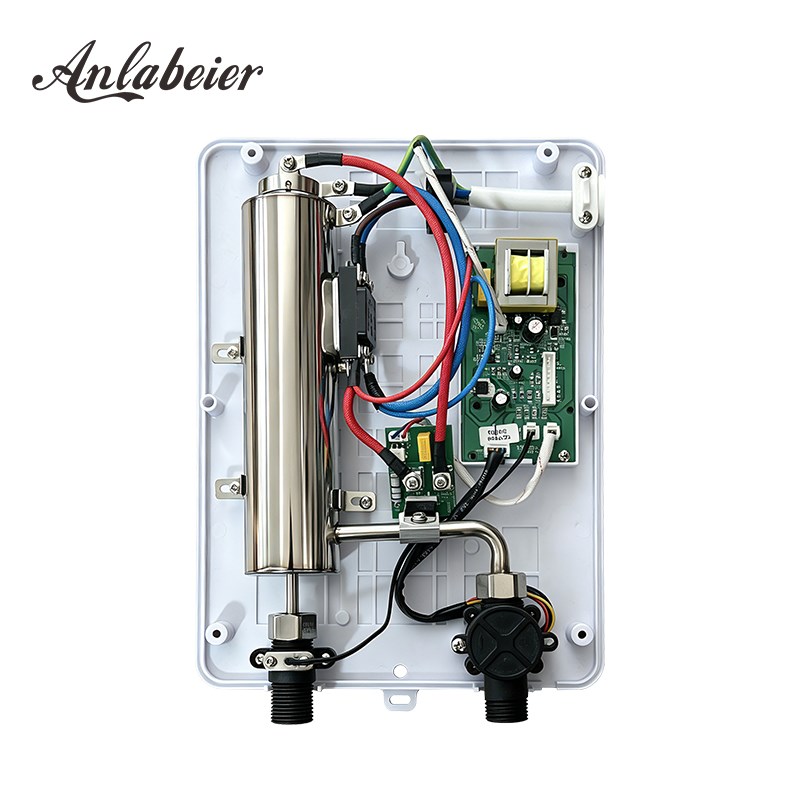
Winter exposes the parts of a water heater that summer hides. Anlabeier units are built around that fact: stainless steel and cast aluminium heating elements that hold up better than bare copper in hard water, ELCB leakage protection, dry-heating cutoff, overheat protection and an IPX4 splash-resistant casing — in wall-mounted models from around 3.5 kW for a single outlet up to 12 kW for a whole home. Zhongshan Chongde Electric Co., Ltd. has manufactured instant electric water heaters since 2010, holds more than 120 patents, and works to CE, CB, RoHS, ETL and ISO9001 standards. That is why our units are specified for homes where January is the test.

Winter does not break a tankless water heater; it reveals how well the unit was chosen and maintained. Check the rating against your coldest inlet water, clean the inlet filter, deal with scale, protect the pipes, and test the electrical side. Do those five things and the coldest week of the year becomes an ordinary week.
Does a tankless water heater work in winter?
Yes. Colder inlet water simply means a larger temperature rise, and possibly a lower flow to hold the setpoint. That is a performance difference, not a failure.
Should I drain my tankless water heater for winter?
Only if the property will be unoccupied through freezing weather, or if the unit sits in an unheated space. In an occupied, heated home, insulated pipes and a sound supply are usually enough.
Why is my instant electric water heater slower in winter?
Because the incoming water is colder — and in hard-water areas, because scale insulates the element.



Scan to wechat


 हिन्दी
 English
 español